
IPTV vs Satellite — Head to Head
| Satellite (Sky Q dish / Freesat) | HiperTV IPTV | |
|---|---|---|
| Annual cost (premium TV) | £700–£1,200 (Sky) / £0 + kit (Freesat) | £55–£70 |
| Channels | ~300 (Sky) / ~170 free (Freesat) | +34,000 |
| Needs broadband | No — works in blackspots | Yes, 15–35 Mbps |
| Weather sensitivity | Heavy rain/snow can degrade signal | Immune to weather |
| Installation | Dish + cabling + engineer (or DIY kit) | 5-minute app install |
| Latency | Lowest (seconds ahead of streams) | A few seconds behind broadcast |
| On-demand | Needs broadband anyway (catch-up apps) | +142,000–192,000 titles native |
| Sport | Bundle add-ons, 3pm blackout | Everything included, every fixture |
| Portability | Fixed to the dish's house | Any device, anywhere with internet |
| Multi-room | Extra boxes + monthly fees | 2–5 screens from £95/yr |
Where Satellite Honestly Still Wins
Broadband-independence is satellite's trump card. A dish needs no internet whatsoever — in the rural blackspots where UK fibre still hasn't arrived (sub-15 Mbps territory), satellite isn't the better choice, it's the only premium-TV choice. If your broadband can't reliably sustain an HD stream, stop reading comparisons: Freesat (free channels, one-off kit cost) or Sky Q satellite is your answer until the fibre van appears on your road.
Latency. Satellite signals arrive seconds before any internet stream — IPTV runs a few seconds behind broadcast (as do Sky Glass and all streaming). For most viewing this is irrelevant; for goal-spoiler-sensitive football fans with noisy neighbours, it's a real if small consideration.
Weather is the counterweighted myth. Yes, severe rain or snow can degrade satellite reception ('rain fade') while IPTV is weather-immune — but UK rain fade is occasional minutes-per-year, not a daily plague. Treat it as a tiebreaker, not a headline. The honest reliability statement: satellite fails rarely from weather; IPTV fails exactly as often as your broadband does. Pick whichever failure mode your household can live with.
Free-to-air economics. Freesat deserves its niche respect: ~170 channels, zero subscription, one-off hardware cost. If a household genuinely only watches the UK free channels, Freesat beats every paid option including ours — we'd rather say that plainly than pretend +34,000 channels matter to someone who watches four.
Three Ways Television Reaches a British Home
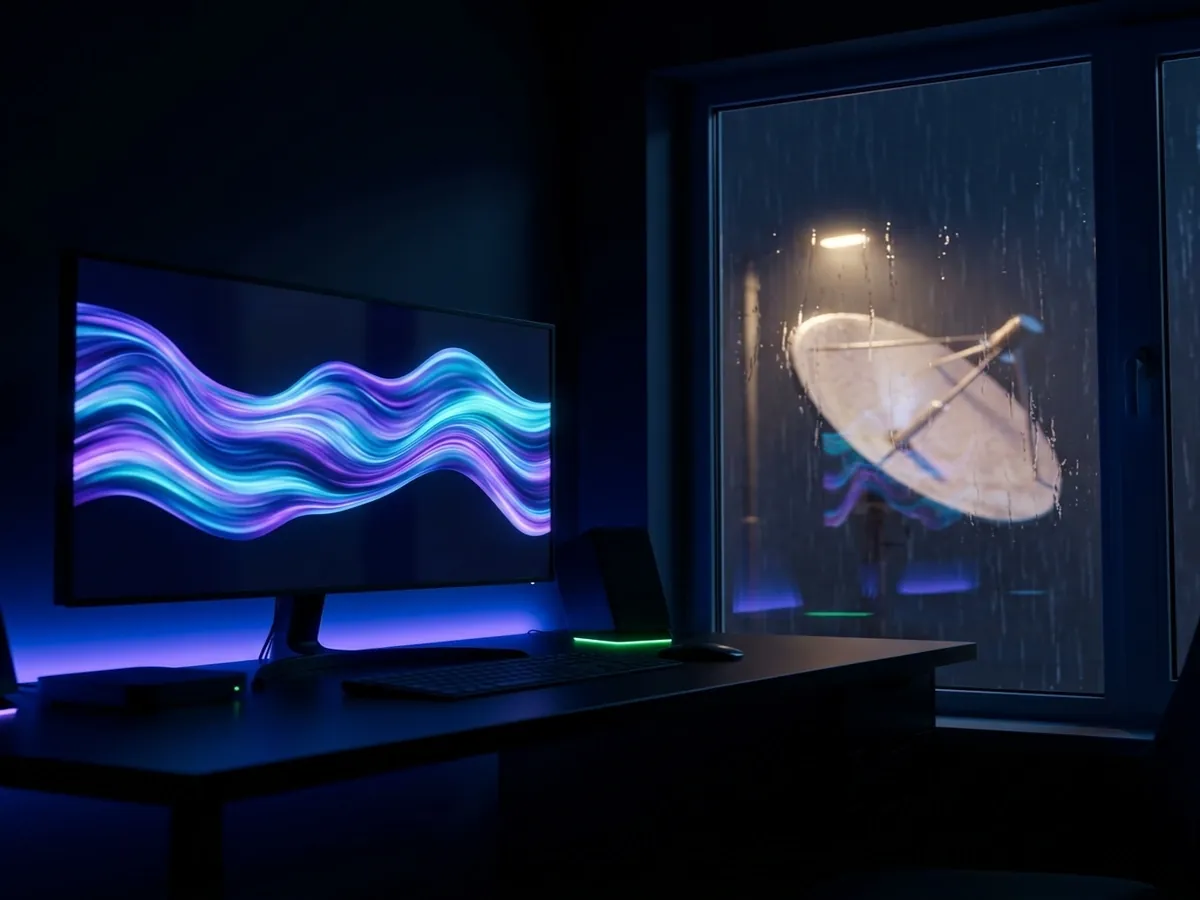
Framing this as satellite versus IPTV leaves out the third route, and most households end up using two of the three. Terrestrial arrives through a rooftop aerial — Freeview, free beyond the TV Licence, carrying the mainstream British channels with HD on any Freeview HD tuner. Satellite arrives through a dish and an LNB — Sky's platform, or Freesat for the free version with a wider channel count than Freeview and reception in areas where terrestrial signal is poor. Broadband arrives through the router you already own, which is IPTV, and needs no external hardware at all.
Each has a genuine failure mode worth knowing before choosing. An aerial depends on your distance from a transmitter and on what your neighbours' roofline does to the signal. A dish depends on an unobstructed southern view and loses picture during heavy rain — the effect engineers call rain fade. Broadband depends on the line into your house holding up at peak hours, which is the 30-minute test further down this page. Nobody's route is immune; they simply fail at different times, which is why plenty of homes keep an aerial as a free fallback regardless of what they pay for.
The practical arrangement most UK households land on is a free base layer plus one paid service: Freeview or Freesat covering the mainstream channels for nothing, and a single paid subscription on top supplying sport, depth and on-demand. This page is really about that second layer — whether it should reach you by dish or by broadband — rather than about ripping out anything you already have.
Why the Industry Itself Is Leaving the Dish
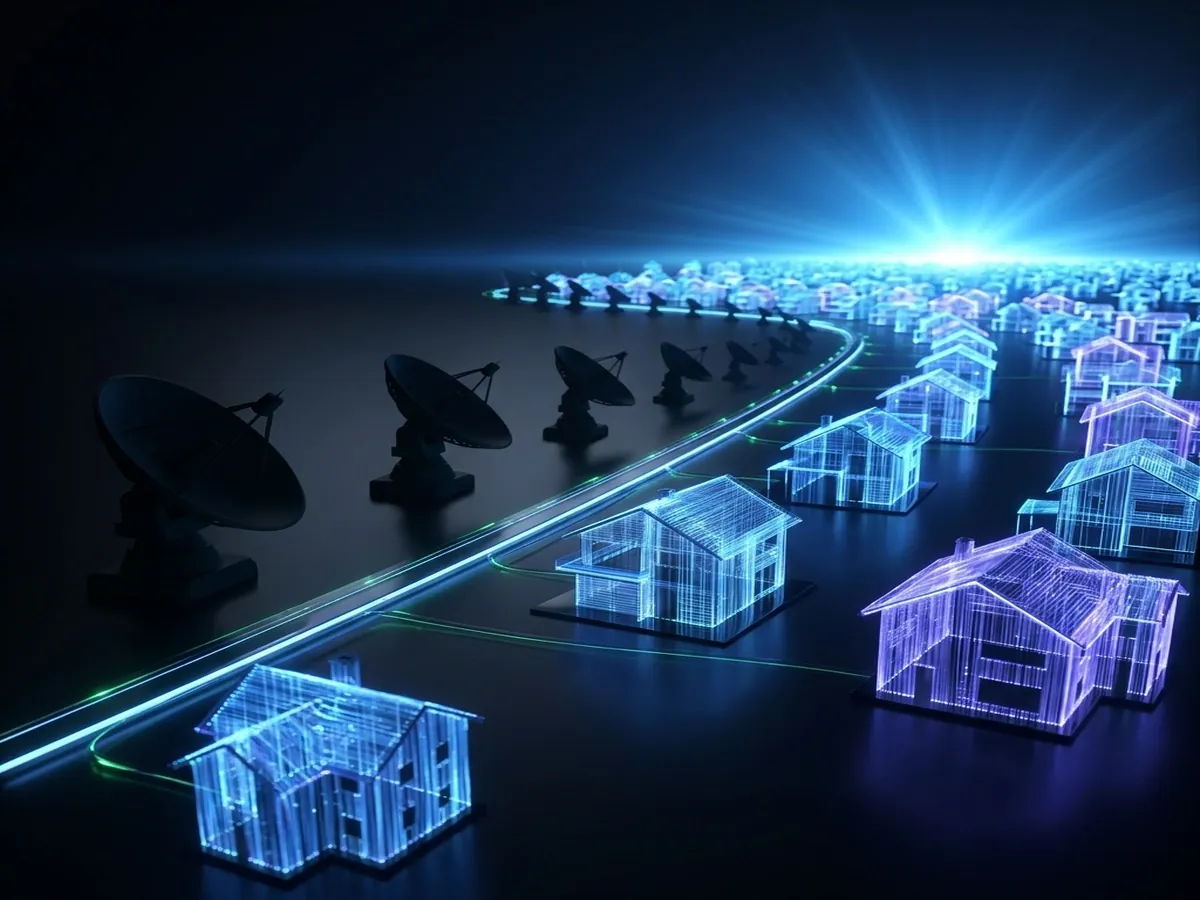
The strongest argument in this comparison isn't ours — it's Sky's. The company that defined British satellite television now sells its flagship products without a dish: Sky Glass and Sky Stream deliver the full Sky service over broadband, pure IPTV. Sky's own messaging treats the dish as legacy; industry reporting has Sky planning satellite wind-down as the subscriber base migrates. When the dominant operator's growth products abandon a delivery technology, the technology's trajectory is settled.
The reasons are structural and they compound: satellite transponder capacity is expensive and fixed (hundreds of channels max, while IPTV serves +34,000 from commodity servers); satellites can't do on-demand (every dish household already needs broadband for catch-up apps — running two delivery systems where one suffices); and the install economics (engineer visits, dish maintenance, listed-building and rental restrictions) belong to a different era. Meanwhile UK full-fibre coverage passed 70% and keeps climbing — every year, the broadband objection covers fewer postcodes.
For households already on decent broadband, the practical comparison collapses to cost and coverage: £55/year for everything versus £700–1,200 for a Sky dish bundle that still can't show Saturday 3pm football. The dish earned its forty years; the economics have simply moved. Test the successor on a £10 one-month trial before the next Sky bill lands — your broadband either proves itself in an afternoon or sends you back to the dish with a clear conscience.
The 30-Minute Broadband Test (Decide With Data)
Whether IPTV will beat your dish is empirically checkable. Run this before deciding anything:
- 1
Speed-test at the TV, not the router
Run a speed test on a phone standing where the TV lives. 25+ Mbps sustained: full steam ahead, 4K included. 15–25: HD will be excellent. Below 15: stay on satellite until your area's fibre improves.
- 2
Take the free trial during peak hours
The £10 one-month trial costs nothing — run it 8–10pm and through a match if possible, when both your broadband and our servers face real load. This is the satellite-vs-IPTV question answered with your own infrastructure.
- 3
Compare side by side
Same channel on dish and stream: picture, stability, and whether the few seconds of latency bother anyone. Households are usually surprised which way the picture-quality comparison goes — HD/FHD streams routinely beat compressed satellite transponders.
- 4
Decide, keeping the dish as plan B
Nothing about IPTV requires removing the dish — Freesat channels still work through it forever, free. Many switchers keep the dish connected as a broadband-outage fallback. That's not indecision; it's good engineering.
The Five-Year View: Betting on the Right Infrastructure
A TV decision in 2026 is really a bet on which infrastructure improves over the next five years — and here the IPTV vs satellite TV question stops being close. Satellite's ceiling is fixed: transponder capacity caps channel counts, UHD expansion is economically frozen, and the operator investment that once flowed to dishes now flows to streaming products. Sky's engineering roadmap is Glass and Stream; Freesat's parent merged into a streaming venture. Nobody is building satellite TV's future, because nobody is funding one.
Broadband's curve runs the other way: UK full-fibre coverage passed 70% in 2025 and climbs annually, altnets keep pushing gigabit into the rural postcodes where the dish still rules, and every increment makes IPTV better — more headroom for 4K and HDR, more simultaneous screens, fewer compromise evenings. The same five years that leave a dish exactly where it is will likely halve the number of UK households for whom satellite remains the rational pick.
Practical translation: if satellite still wins at your address today, the right move is satellite now with an annual broadband re-check — fibre arrival flips the maths overnight, and your British IPTV line-up will be waiting. If fibre has already arrived, the five-year bet is heavily one-sided, and the free trial prices the switch experiment at zero. Either way, you're not choosing between equals; you're choosing when to board a transition that's already happened upstream.
IPTV vs Satellite — FAQs
Is IPTV more reliable than satellite TV?
They fail differently: satellite degrades in severe weather but ignores your broadband; IPTV is weather-immune but inherits your internet's reliability. On decent fibre, IPTV's 99.9% uptime makes the comparison a wash — below ~15 Mbps, satellite wins outright. The 30-minute test above answers it for your specific house.
Do I need to remove my dish to switch to IPTV?
No — the dish can stay forever. Free satellite channels (Freesat) keep working through it at zero cost, and plenty of switchers keep the dish as a broadband-outage backup while IPTV handles daily viewing. The two coexist happily.
Is satellite TV being phased out in the UK?
Effectively, yes — gradually. Sky's flagship products (Glass, Stream) are dishless IPTV and the company has signalled satellite wind-down as subscribers migrate; Freesat's future is tied to the streaming-first Everyone TV/Freely project. No imminent switch-off date exists, but every industry investment points one direction.
How does Freesat compare to IPTV?
Freesat: ~170 free channels, one-off kit cost, no subscription — unbeatable for free-channel-only households. IPTV adds the other +33,800 channels, all premium sport, and on-demand for £55/year. They answer different questions: 'free TV without broadband' vs 'everything, cheaply, over broadband'.
What about Freeview — how does an aerial compare?
Freeview is the third route and worth keeping in view. It needs a rooftop aerial rather than a dish, costs nothing beyond the TV Licence, and carries the mainstream British channels with HD on a Freeview HD tuner. For a household watching BBC, ITV, Channel 4 and Channel 5 and not much else, it is genuinely sufficient and no subscription of any kind is justified — we would rather say that than sell you something you do not need. What an aerial cannot deliver is live sport, channel depth or on-demand at scale; those channels simply are not carried and never will be. Terrestrial broadcasting is also government-committed into the 2030s, so an aerial is not about to stop working.
Which has better picture quality — satellite or IPTV?
Per channel it depends on bitrates: satellite transponders compress heavily on lesser channels, while quality IPTV carries native HD/FHD and true 4K on UHD plans. In side-by-side tests on good broadband, our streams typically match or beat satellite on mainstream channels. Run the comparison yourself — it's free.
Is IPTV legal like satellite is?
The delivery technology is exactly as legal — Sky's own products use it. Per-provider content licensing is the nuance, covered honestly in our IPTV legality in the UK guide. Satellite's cleaner legal simplicity is real; so is the 15× price difference. Informed trade-offs are the theme of every guide here.

Forty Years of Dish. One Afternoon to Compare.
Run the £10 one-month trial against your satellite picture tonight — same channels, side by side, on your own broadband. The comparison costs nothing and settles everything.
